

Blog
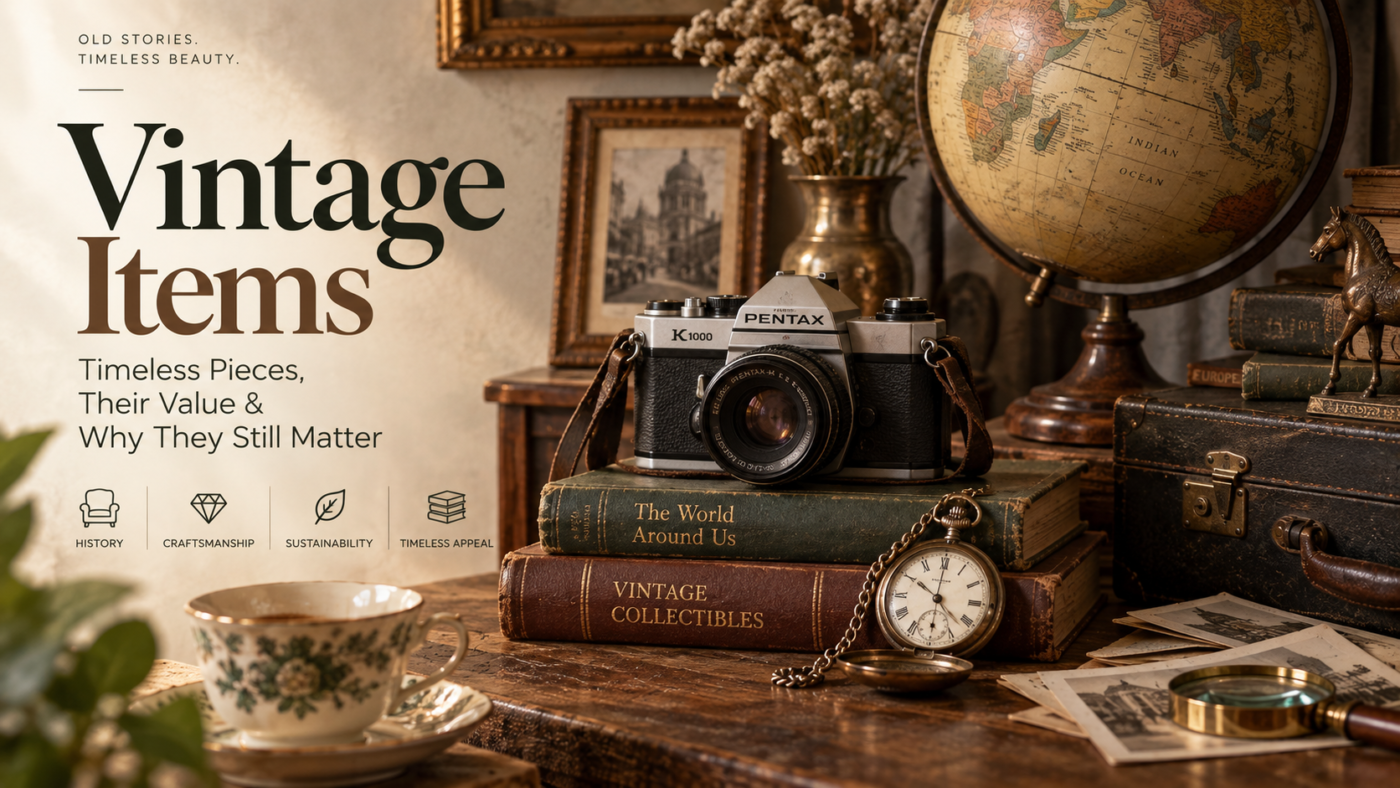
Vintage Items: Timeless Pieces, Their Value & Why They Still Matter
Sep
Vintage items have a unique charm that modern products often struggle to reproduce. From antique furniture and classic watches to old cameras, jewelry, clothing, books, and home décor, vintage pieces carry a sense of history, craftsmanship, and individuality.
Whether you’re a collector, a home décor enthusiast, or simply someone who appreciates beautiful objects from the past, vintage items can add character and personality to everyday life.
What Are Vintage Items?
Vintage items are products or objects that come from an earlier period and are valued for their age, design, craftsmanship, cultural significance, or nostalgic appeal.
The term “vintage” is generally used for items that are old enough to represent a particular era but aren’t necessarily considered antiques. The exact definition can vary depending on the category.
Common vintage items include:
- Furniture
- Watches and clocks
- Jewelry
- Clothing and accessories
- Cameras
- Books and magazines
- Vinyl records
- Home décor
- Ceramics and glassware
- Collectible toys
- Musical instruments
- Posters and artwork
Why Are Vintage Items So Popular?
1. Unique Character
Vintage products often have details, materials, and designs that are difficult to find in mass-produced modern products.
A vintage wooden cabinet, for example, may feature handcrafted details and natural signs of aging that give it a distinctive appearance.
2. Connection to the Past
Vintage items can provide a physical connection to another time. A classic camera, old record player, or vintage piece of clothing can remind people of a particular era or cultural style.
3. Craftsmanship
Many older products were made with techniques and materials that emphasized durability and attention to detail.
This is one reason collectors often appreciate vintage furniture, watches, jewelry, and other well-preserved objects.
4. Sustainability
Buying pre-owned vintage products can give existing items a longer life instead of sending them to waste.
Choosing second-hand furniture, clothing, and décor can also reduce the demand for newly manufactured products.
5. Collecting and Investment
Some vintage items can become valuable collectibles. Their value may depend on factors such as rarity, condition, brand, age, provenance, and demand among collectors.
However, not every old item is valuable, and collectible prices can change over time.
Popular Categories of Vintage Items
Vintage Furniture
Vintage furniture can transform a room by adding warmth and personality. Wooden cabinets, chairs, desks, mirrors, and tables from earlier periods are particularly popular.
Look for solid construction, quality materials, and details that reflect the period in which the piece was made.
Vintage Watches
Mechanical watches from earlier decades are popular among collectors. Factors such as manufacturer, model, rarity, condition, originality, and service history can affect their value.
Vintage Jewelry
Vintage jewelry can feature distinctive designs, gemstones, precious metals, and craftsmanship associated with a particular era.
Before purchasing an expensive piece, consider getting its materials and authenticity professionally evaluated.
Vintage Clothing
Vintage fashion allows people to explore styles from previous decades. Dresses, jackets, handbags, scarves, denim, and accessories can all become statement pieces.
When buying vintage clothing, check the fabric, stitching, condition, measurements, and any signs of restoration.
Vintage Cameras
Film cameras remain popular among photography enthusiasts who enjoy the experience and aesthetic of analog photography.
Classic cameras can also make attractive display pieces even when they’re no longer used regularly.
Vintage Home Décor
Old mirrors, clocks, lamps, ceramics, posters, artwork, and decorative objects can give a home an individual look.
Combining a few vintage pieces with contemporary furniture can create an interesting balance between old and new.
How to Identify a Valuable Vintage Item
Age alone doesn’t determine value.
Consider these factors:
Condition: Well-preserved items generally attract more interest than severely damaged pieces.
Rarity: Limited-production or uncommon items may be more desirable.
Brand or maker: Recognized manufacturers and designers can influence collectibility.
Originality: Original parts, finishes, packaging, and documentation can add value.
Provenance: A documented history of ownership can sometimes increase an item’s appeal.
Demand: Ultimately, collector interest plays an important role in determining market value.
Tips for Buying Vintage Items
Before purchasing a vintage item, take your time and inspect it carefully.
Check the Condition
Look for cracks, repairs, stains, missing parts, rust, fading, and structural damage.
Research the Item
Search for the manufacturer, model, approximate production period, and comparable examples.
Check Authenticity
For expensive watches, jewelry, artwork, collectibles, and designer products, authentication can be especially important.
Compare Prices
Don’t rely on a single listing to determine an item’s value. Compare multiple sources and, where possible, look at actual completed sales rather than only asking prices.
Ask About Its History
If the seller has information about where the item came from, previous ownership, or restoration work, ask for details.
How to Care for Vintage Items
Proper care can help preserve vintage pieces for years.
- Keep items away from excessive moisture.
- Avoid prolonged direct sunlight.
- Use appropriate cleaning methods for the material.
- Store delicate clothing in suitable conditions.
- Keep paper products away from humidity.
- Don’t aggressively polish items without understanding their finish.
- Have valuable watches, jewelry, or furniture professionally serviced when necessary.
Vintage vs. Antique: What’s the Difference?
The terms are often used interchangeably, but they aren’t necessarily the same.
Vintage generally refers to an item from a previous era that has cultural, stylistic, or collectible significance.
Antique is generally used for significantly older objects, often those that are at least 100 years old, although definitions can vary by market and category.
Why Vintage Items Make Great Gifts
Vintage products can make memorable gifts because they are often distinctive and personal.
A vintage watch, classic book, old camera, vinyl record, or decorative object can be chosen based on someone’s interests, personality, or favorite era.
Unlike mass-produced products, a vintage gift can have a story behind it.
Final Thoughts
Vintage items are more than old products. They can represent craftsmanship, history, culture, design, and personal memories.
Whether you’re decorating your home, building a collection, exploring vintage fashion, or looking for a unique gift, vintage pieces offer an opportunity to own something with character.
The key is to research carefully, evaluate condition and authenticity, and choose pieces that genuinely appeal to you rather than buying something simply because it is old.
The beauty of vintage is that every piece has a story—and sometimes, that story is what makes it special.
