

Blog
Dandruff: Causes, Symptoms, Prevention & Effective Ways to Manage It
Sep
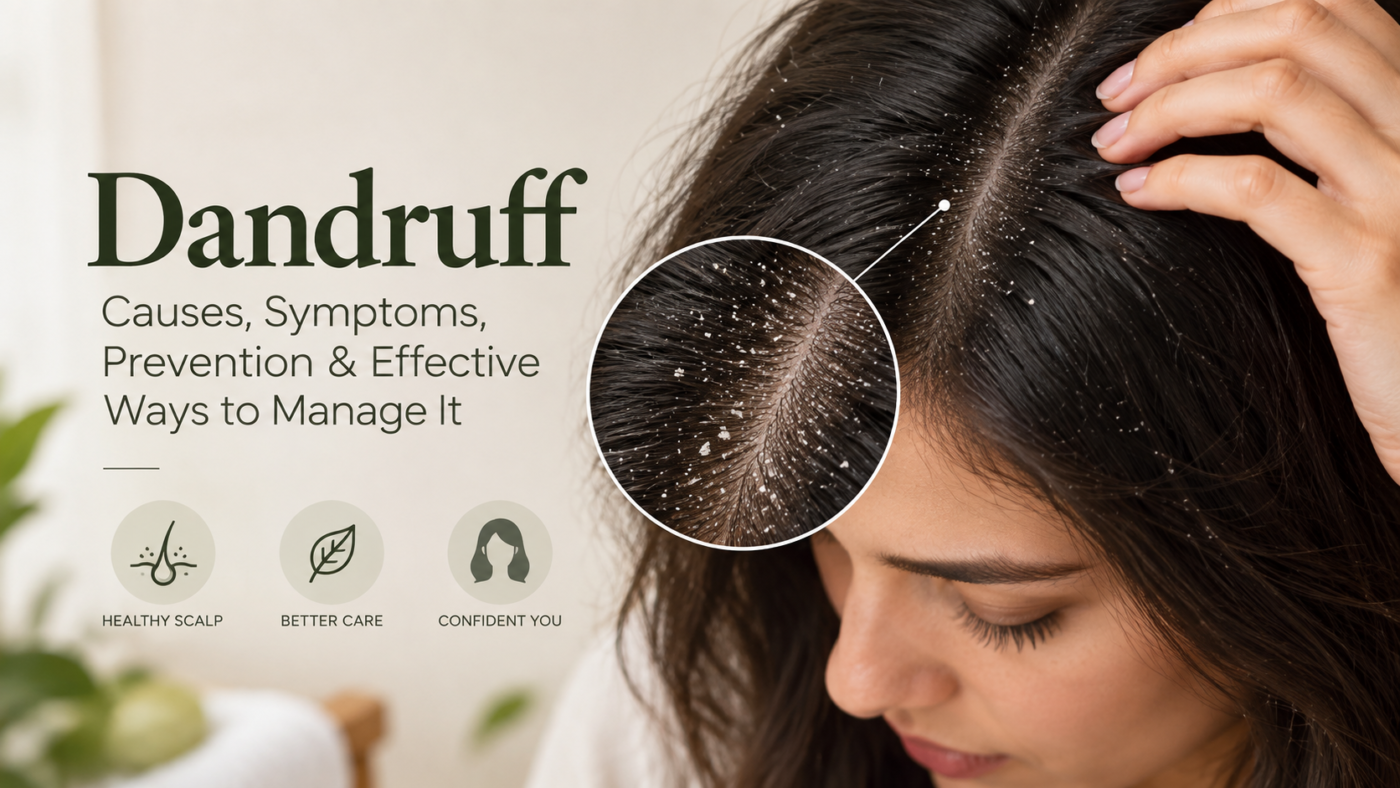
Dandruff is one of the most common scalp concerns, affecting people of all ages. Those small white flakes on your shoulders may seem harmless, but persistent dandruff can sometimes come with itching, scalp irritation, dryness, or excess oil.
The good news is that dandruff can often be managed with the right scalp-care routine and suitable hair-care products. In this guide, we’ll explain what causes dandruff, its common symptoms, how to prevent it, and what you can do to keep your scalp healthier.
What Is Dandruff?
Dandruff is a common scalp condition that causes visible flakes of dead skin to appear on the scalp and hair. It can occur when the scalp’s natural skin-shedding process becomes faster or when factors such as oiliness, irritation, or a yeast-like fungus called Malassezia contribute to inflammation and flaking.
Dandruff is not usually contagious and is generally not a serious medical condition. However, recurring or severe symptoms may require advice from a dermatologist.
Common Symptoms of Dandruff
Dandruff can look different from person to person, but common symptoms include:
- White or grayish flakes on the scalp and hair
- Itchy scalp
- Dry or irritated scalp
- Flakes visible on dark-colored clothing
- Oily or greasy scalp
- Mild redness or irritation
- Increased flaking during certain seasons or periods of stress
If your scalp becomes very red, painful, swollen, develops sores, or has significant hair loss, it’s better to consult a dermatologist rather than treating the problem as ordinary dandruff.
What Causes Dandruff?
There isn’t just one cause of dandruff. Several factors can contribute to scalp flaking.
1. Excess Oil on the Scalp
An oily scalp can create an environment where Malassezia can thrive. This may contribute to irritation and increased shedding of scalp skin.
2. Dry Scalp
Cold or dry weather, hot showers, and certain hair-care products can contribute to scalp dryness and flaking.
However, not every flaky scalp is simply caused by dryness. Dandruff and dry scalp are related but different concerns.
3. Malassezia
Malassezia is a naturally occurring microorganism found on the scalp. In some people, it can contribute to inflammation and increased skin-cell turnover, resulting in dandruff.
4. Hair-Care Products
Some shampoos, styling products, dyes, and fragrances can irritate the scalp or cause contact dermatitis in sensitive individuals. This may result in itching and flaking.
5. Stress
Stress doesn’t necessarily directly cause dandruff, but it may make existing scalp problems more noticeable or difficult to manage.
6. Skin Conditions
Conditions such as seborrheic dermatitis, psoriasis, or eczema can cause symptoms that resemble dandruff. These conditions may need specific treatment.
Dandruff vs. Dry Scalp: What’s the Difference?
Dandruff and dry scalp are often confused.
Dry scalp is generally associated with a lack of moisture and may produce small, dry flakes. The scalp may feel tight or uncomfortable.
Dandruff, on the other hand, is often associated with oiliness, irritation, and larger visible flakes. It can be related to Malassezia and seborrheic dermatitis.
Because symptoms can overlap, persistent or severe flaking should be evaluated by a healthcare professional.
How to Manage Dandruff
A consistent scalp-care routine can help manage mild dandruff.
Use an Anti-Dandruff Shampoo
Anti-dandruff shampoos may contain active ingredients such as:
- Ketoconazole
- Zinc pyrithione
- Selenium sulfide
- Salicylic acid
- Coal tar
Different ingredients work in different ways. Follow the product’s instructions carefully and give the shampoo enough contact time with the scalp when directed.
Wash Your Scalp Regularly
Regular washing can help remove excess oil, dead skin cells, and product buildup. How often you should wash depends on your scalp type and hair texture.
If your scalp becomes oily quickly, you may need to wash more frequently.
Avoid Scratching
Scratching may temporarily relieve itching, but it can irritate the scalp further and potentially cause small breaks in the skin.
Instead, focus on addressing the underlying scalp problem.
Be Careful With Hair Products
If you notice that a particular hair product causes itching or irritation, stop using it and see whether your symptoms improve.
Choose products that are appropriate for your scalp and avoid excessive use of heavy styling products if they contribute to buildup.
Home Care Tips for a Healthier Scalp
Along with an appropriate shampoo, simple habits can support scalp health:
- Keep your scalp clean.
- Avoid very hot water when washing your hair.
- Don’t scratch aggressively.
- Wash pillowcases and towels regularly.
- Avoid sharing combs and brushes.
- Give your scalp time to recover from irritating products.
- Maintain a balanced diet and healthy lifestyle.
- Manage stress through adequate sleep, exercise, and relaxation.
Be cautious with DIY remedies such as lemon juice, baking soda, or undiluted essential oils. These can irritate the scalp and potentially make symptoms worse.
When Should You See a Dermatologist?
You should consider seeing a dermatologist if:
- Dandruff doesn’t improve with an appropriate anti-dandruff shampoo.
- Your scalp is very itchy or painful.
- You develop significant redness or swelling.
- You have thick, stubborn patches or scales.
- You notice sores or bleeding.
- You experience unexplained hair loss.
- Flaking spreads to areas such as the face, eyebrows, ears, or beard.
A dermatologist can determine whether you’re dealing with ordinary dandruff, seborrheic dermatitis, psoriasis, eczema, or another scalp condition.
Frequently Asked Questions About Dandruff
Is dandruff caused by poor hygiene?
Not necessarily. Dandruff can occur even when you maintain good personal hygiene. Factors such as scalp oil, Malassezia, skin sensitivity, genetics, and environmental conditions can all play a role.
Can dandruff cause hair loss?
Dandruff itself doesn’t usually cause permanent hair loss. However, intense itching and scratching can damage the scalp and contribute to temporary hair shedding or breakage.
Should I wash my hair every day if I have dandruff?
It depends on your scalp and hair type. Some people with oily scalps benefit from frequent washing, while others may need less frequent washing. An appropriate anti-dandruff shampoo can be used according to its instructions.
Is dandruff contagious?
No. Ordinary dandruff is not considered contagious.
Can dandruff be completely cured?
Dandruff can often be effectively controlled, but it may return from time to time. Maintaining a suitable scalp-care routine can help reduce recurring symptoms.
Final Thoughts
Dandruff is common, manageable, and usually not a serious health concern. The key is understanding your scalp and choosing an appropriate routine rather than relying on harsh DIY treatments.
If flakes and itching continue despite regular care, don’t ignore them. A dermatologist can help identify the underlying cause and recommend appropriate treatment.
A healthy scalp is the foundation of healthy-looking hair — so give your scalp the care and attention it deserves.
