

Blog
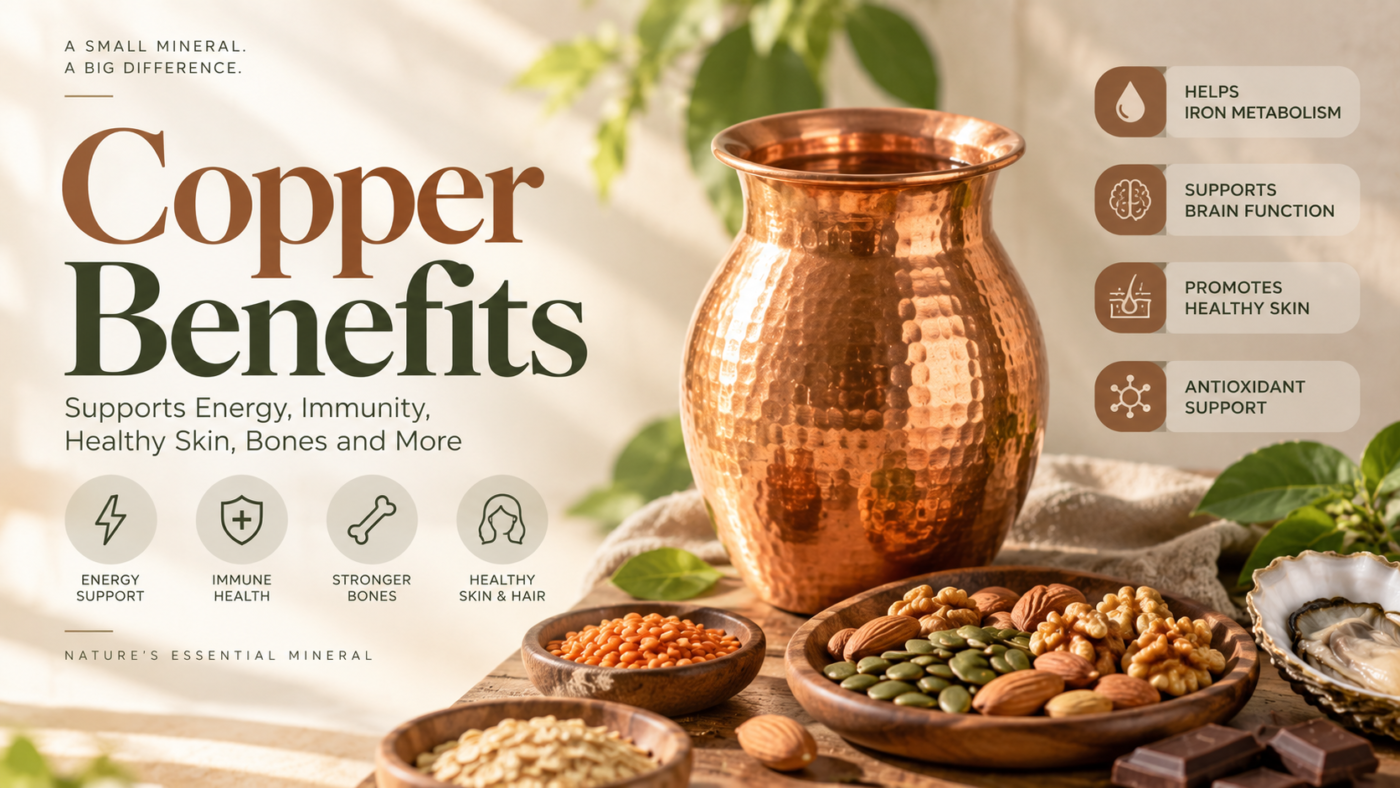
Copper Benefits: Why This Essential Mineral Matters
Sep
Copper Benefits: Why This Essential Mineral Matters
Copper is an essential trace mineral that your body needs in small amounts to function properly. Although it is required in much smaller quantities than minerals such as calcium or magnesium, copper plays an important role in energy production, iron metabolism, connective tissue formation, nervous-system function, and immune health.
A balanced diet usually provides enough copper for most people. However, understanding its role, dietary sources, and recommended intake can help you make informed choices about your nutrition.
What Is Copper?
Copper is an essential mineral involved in several important biological processes. Your body uses copper to support enzymes that help with energy production, iron metabolism, antioxidant defense, and the development and maintenance of connective tissues.
Because the body cannot produce copper on its own, it needs to obtain it from food.
Health Benefits of Copper
1. Supports Iron Metabolism
Copper helps the body use and transport iron properly. Copper-dependent proteins are involved in iron metabolism and the formation of red blood cells.
Adequate copper intake therefore contributes to normal blood and oxygen-related functions.
2. Supports Energy Production
Copper is involved in enzymes that help cells produce energy. It contributes to normal cellular metabolism and helps the body convert nutrients into usable energy.
3. Helps Maintain Healthy Connective Tissue
Copper is required for enzymes involved in collagen and elastin formation. These proteins are important components of skin, blood vessels, bones, cartilage, and other connective tissues.
4. Supports the Nervous System
Copper plays a role in maintaining normal nervous-system function. Copper-dependent enzymes are involved in processes important for nerve cells and neurotransmitter metabolism.
5. Contributes to Immune Function
Adequate copper is important for normal immune-system function. Both insufficient and excessive copper can negatively affect health, which is why maintaining an appropriate intake is important.
6. Provides Antioxidant Support
Copper is part of the antioxidant enzyme copper-zinc superoxide dismutase. This enzyme helps protect cells from oxidative stress by converting certain reactive molecules into less harmful substances.
7. Supports Bone Health
Copper contributes to the formation and maintenance of connective tissues and bone-related structures. It works alongside other nutrients that are important for maintaining normal bone health.
Foods Rich in Copper
Copper is naturally found in many foods. Good dietary sources include:
- Oysters and other shellfish
- Liver and other organ meats
- Nuts and seeds
- Dark chocolate
- Whole grains
- Beans and lentils
- Mushrooms
- Tofu
- Some seafood
Including a variety of nutrient-rich foods in your diet can help provide adequate copper.
How Much Copper Do You Need?
The recommended dietary allowance for copper varies by age and life stage.
For most healthy adults, the recommended intake is approximately 900 micrograms (mcg) per day.
Requirements can differ for children, adolescents, pregnancy, and breastfeeding. Most people can obtain sufficient copper through a varied diet.
What Happens If You Don’t Get Enough Copper?
Copper deficiency is uncommon in healthy people who eat a varied diet. However, inadequate copper can affect several body systems.
Possible signs of deficiency may include:
- Anemia
- Low white blood cell levels
- Weakness or fatigue
- Bone abnormalities
- Changes in nervous-system function
- Problems with connective tissue
Copper deficiency can have different causes, including certain medical conditions, malabsorption problems, or excessive zinc intake.
Can You Get Too Much Copper?
Yes. More copper isn’t necessarily better.
Excessive copper intake, particularly from supplements or contaminated water, can cause nausea, vomiting, abdominal pain, and other health problems. Very high exposure can be toxic to the liver and other organs.
For adults, the tolerable upper intake level from all sources is 10,000 mcg (10 mg) per day.
Copper supplements should therefore not be taken routinely unless there is a specific reason or healthcare professional recommendation.
Copper and Zinc: Why Balance Matters
Copper and zinc interact with each other. Taking very high amounts of zinc for a long period can interfere with copper absorption and potentially contribute to copper deficiency.
If you use mineral supplements regularly, avoid taking high doses without professional guidance.
Does Drinking Water From a Copper Vessel Provide Health Benefits?
Copper vessels are traditionally used in some cultures to store drinking water. Copper can enter water from copper-containing surfaces, but the amount depends on factors such as water chemistry and contact time.
There is not enough evidence to conclude that drinking water stored in a copper vessel provides broad health benefits beyond meeting normal copper requirements.
Copper is an essential nutrient, but that does not mean more dietary copper is better.
Copper for Skin and Hair
Copper is involved in collagen and connective-tissue formation, which makes it biologically relevant to skin structure. It is also involved in enzymes associated with pigmentation and other cellular processes.
However, claims that copper supplements or copper products will dramatically improve hair growth, reverse aging, or treat skin conditions should be viewed carefully unless supported by clinical evidence.
Who May Need to Pay More Attention to Copper Intake?
Most people don’t need to specifically supplement copper. However, copper status may be relevant for people with certain medical conditions or nutritional issues that affect absorption.
People taking high-dose zinc supplements or those with conditions that affect nutrient absorption should discuss their nutritional needs with a healthcare professional.
Final Thoughts
Copper is a small but important part of a healthy diet. It contributes to iron metabolism, energy production, connective tissue, nervous-system function, immune health, and antioxidant defenses.
For most people, the best way to obtain copper is through a varied, balanced diet containing foods such as nuts, seeds, legumes, whole grains, seafood, and other nutrient-rich foods.
Because excessive copper can also be harmful, copper supplements should be used thoughtfully and preferably with professional guidance.
A balanced diet is usually the best way to get the copper your body needs.
